Home > News > Top 10 Insulation Piercing Connector Manufacturers in 2026: Product Lines and Buyer Checks
News
Top 10 Insulation Piercing Connector Manufacturers in 2026: Product Lines and Buyer Checks
Posted by conwell
Insulation piercing connectors appear in the catalogues of specialist power-line manufacturers and much larger electrical groups. The companies differ in history, geographic reach, manufacturing focus, and the networks they serve. This overview introduces ten manufacturers with identifiable IPC offerings and places them in the wider low-voltage connector market.
The companies are listed alphabetically. This is an editorial selection based on publicly available company and product information, not a ranking by revenue, market share, or independently tested performance. The company profiles are drawn from each manufacturer’s published information.
LV Piercing Connector Market Snapshot
PW Consulting’s worldwide LV piercing connector report estimates a 2025 market value of USD 585.4 million and forecasts USD 848.75 million by 2032, equivalent to a 5.45% compound annual growth rate. The figures below are that publisher’s market estimates, not independently verified sales figures or evidence that any company on this list holds a particular market share.
Measure
Report estimate
2025 global market value
USD 585.4 million
2032 projected market value
USD 848.75 million
Power utilities and grid distribution, 2025
70.8% of market revenue
Street lighting systems, 2025
19.2% of market revenue
Single-bolt connectors, 2025
61.8% of market revenue
Asia Pacific, 2025
42.0% of market revenue
The application split makes two procurement needs visible. Utility tenders generally require repeatable installation and model-specific approval documents across large orders, while street-light projects may need smaller tap-conductor ranges and clear field instructions. The single-bolt share describes reported market demand; it does not establish that a single-bolt connector is suitable for every conductor pair. Buyers should use the market figures to frame the shortlist, then approve products against their own technical specification.
Company Profiles: Ten IPC Manufacturers
CONWELL (Zhejiang Keyi Electric Group)
Zhejiang Keyi Electric Group, known as CONWELL, was founded in 2004 in Yueqing, China. It develops and manufactures overhead distribution accessories, including piercing connectors, anchor and suspension clamps, and fiber-optic fittings. Its company pages describe automated production lines, R&D teams, and a CNAS-accredited laboratory. The CONWELL IPC range is one part of this broader portfolio; published examples include the KW101-CT and KW2-95.
Official website: https://www.cnconwell.com/
Ensto
Ensto is a Finnish family-owned technology company founded in Porvoo in 1958. Its present focus is electricity distribution, with line and cable accessories, distribution automation, substations, and protection and control solutions. The company says it operates across Europe, North America, and Asia and works with distribution system operators, industrial customers, and renewable-energy producers. Insulation piercing connectors sit within its wider overhead-line accessory range.
Official website: https://www.ensto.com/
ILSCO
nVent ILSCO traces its power-connection business to 1894. Its company profile describes work across commercial, industrial, telecom, utility, datacom, and rail applications, supported by copper and aluminum manufacturing and testing capabilities. The portfolio is considerably wider than IPCs, covering mechanical and compression connectors, grounding, and installation tools. Its KUP-L-Tap IPCs use North American conductor-size conventions, which makes regional specification checks particularly important.
Official website: https://www.ilsco.com/
JERA LINE
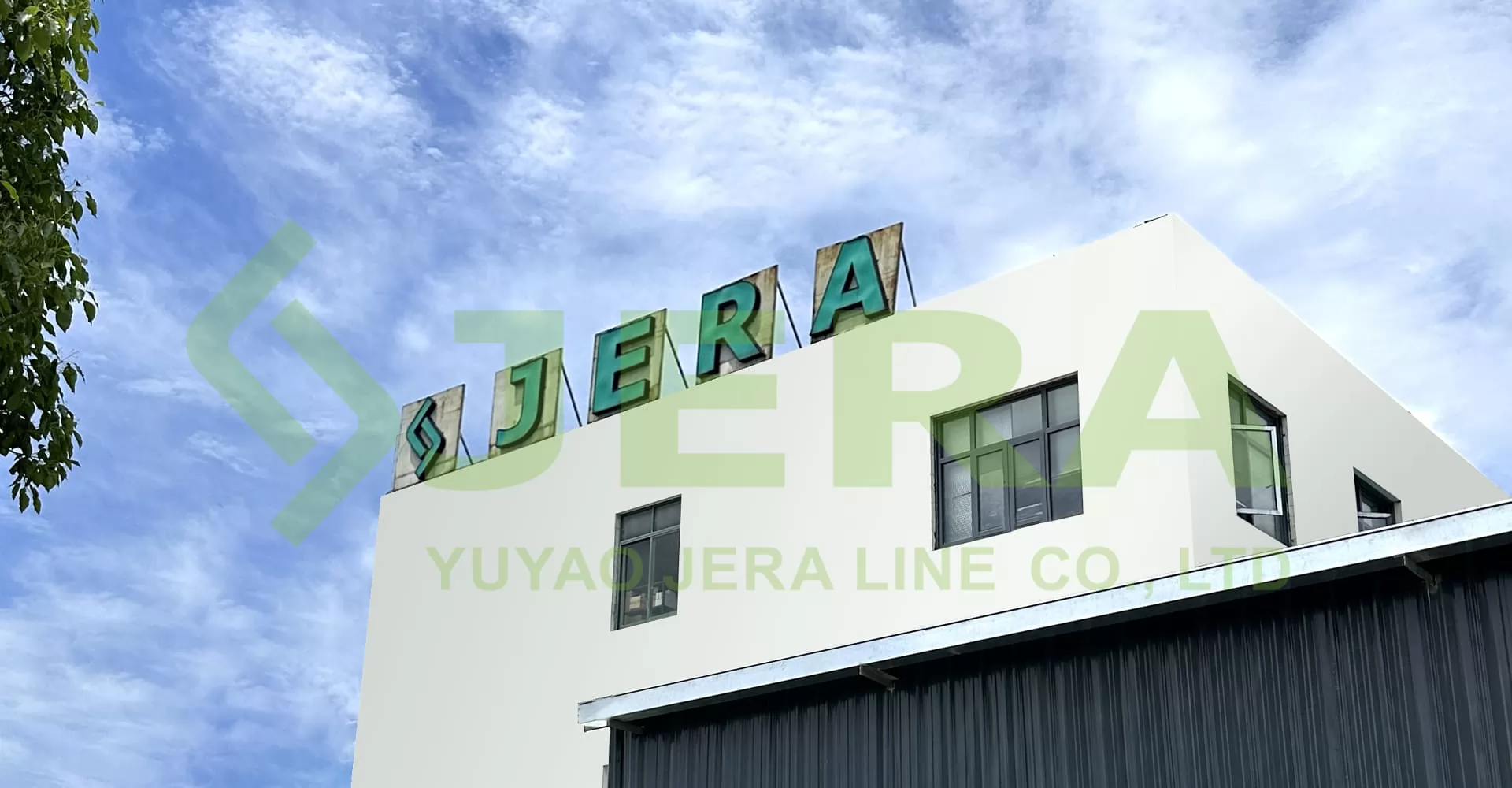
Yuyao JERA LINE is a manufacturer based in Ningbo, China. Its company materials describe in-house research, production, and assembly for low- and medium-voltage overhead and underground cable networks, along with OEM services and an on-site test laboratory. The range includes cable clamps, connectors, terminations, and overvoltage-protection accessories. Its ZOP insulation piercing connectors serve overhead branch connections, but are only one part of the company’s cable-infrastructure offering.
Official website: https://www.jera-energy.com/
NILED
NILED is a French manufacturer whose history in low-voltage network connections dates to 1932. The company says its product development has long been linked to French electricity utilities, including EDF and Enedis. It supplies connecting, anchoring, and related accessories for distribution networks and reports substantial export activity. Its company pages also describe laboratories for electrical, mechanical, climatic, and corrosion testing. IPCs form part of that larger network-accessory range.
Official website: https://www.niled.eu/en/
PFISTERER
Founded in Germany in 1921 and headquartered in Winterbach, PFISTERER develops systems for contacting and insulating conductors throughout power generation, transmission, and distribution. The company describes an international network of operating locations, factories, and sales partners. Its work spans cable systems, overhead lines, and grid components. LV piercing connectors are part of this much wider portfolio; some are intended for cable-joint systems rather than overhead ABC taps, so the application must be checked.
Official website: https://www.pfisterer.com/en
Sicame
Sicame Group was founded in 1955 in Pompadour, France. It has grown into an international group supplying equipment and services for electricity transmission and distribution; its corporate site reports 50 subsidiaries and 3,800 employees. The group operates through regional businesses, so product catalogues and part numbers can vary by market. The TTD insulation piercing connector range appears within its low-voltage overhead network offering.
Official website: https://sicame-group.com/en/
SMICO
Zhejiang Smico Electric Power Equipment is based in Liushi, Yueqing, China. Its company profile describes manufacturing across aerial fittings, cable terminals, power connectors, insulators, arresters, and switching equipment. The firm markets products to customers in Europe, the Americas, the Middle East, and Southeast Asia. Its SM2-95 insulation piercing connector is one example from a catalogue that covers several parts of distribution-line construction.
Official website: https://www.smicopower.com/
SUNJ Electrical
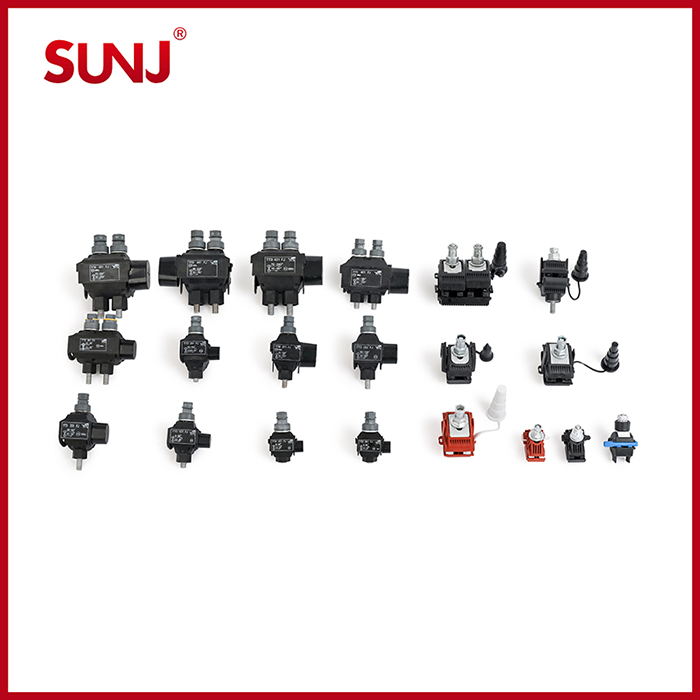
Zhejiang SUNJ Electric is based in Liushi, Yueqing, a manufacturing center in China’s electrical industry. Its website describes research, manufacturing, and export activity across power fittings, overhead-line accessories, insulators, arresters, and other transmission and distribution equipment. SUNJ publishes a JJC-series IPC range alongside those broader product families. For buyers comparing Chinese suppliers, its company profile and model documentation should be reviewed separately.
Official website: https://www.sunjelec.com/
TE Connectivity
TE Connectivity is a global industrial technology company focused on connectivity and sensor solutions. Its official company materials describe customers in about 130 countries and applications spanning energy networks, transportation, industrial automation, medical technology, and data infrastructure. The Energy business supplies utilities and grid-equipment manufacturers within that larger organization. TE’s P3X/P4X main IPC family is designed for overhead LV ABC main-to-main connections, a narrower use than the company’s overall portfolio.
Official website: https://www.te.com/
Compare the Connection Before the Brand
The suppliers above do not all address the same installation. First separate overhead ABC taps, main-to-main connections, bare-to-insulated connections, and low-voltage cable joints. Then compare only products intended for the same duty. A market report may group these products under the broad term “LV piercing connectors,” but a tender must specify the actual conductor and installation conditions.
Conductor pair: State the main and branch cross-sections separately, including whether each conductor is aluminum or copper.
Electrical duty: Provide system voltage, expected current, and the utility’s applicable specification.
Installation: Check the manufacturer’s bolt design, shear torque, required tools, and instructions for the selected model.
Outdoor exposure: Ask for the relevant sealing, aging, and corrosion test evidence when the project specification requires it.
Approval evidence: Match every data sheet and test report to the exact quoted part number and standard version.
Documents to Request From Every Shortlisted Manufacturer
Send the same technical request to every candidate. Ask for a model-specific data sheet, drawing, installation instructions, sample, relevant test report, and confirmation of conductor compatibility. A company-level quality certificate does not establish that every IPC model meets a project’s product tests. Compare documents by part number and test scope, and record any gap before approving a substitute.
For the RFQ, include the project country, application, voltage, main and branch conductor material and size, insulation type, quantities by connection type, required standard, packaging and label requirements, sample quantity, and delivery date. CONWELL’s existing LV ABC selection guide provides additional model-matching context.
Frequently Asked Questions
Are all insulation piercing connectors suitable for LV ABC overhead lines?
No. The manufacturer’s stated application matters. Some products in this wider market are intended for cable joints or other conductor systems. Check the exact model’s installation location, voltage, conductor range, and local specification.
Can two manufacturers’ IPCs be compared by conductor range alone?
No. A matching size window is only the first filter. Compare conductor materials, insulation type, electrical duty, installation procedure, test evidence, and project approval requirements.
What should a utility buyer ask for before a sample trial?
Request the exact part number, data sheet, installation instructions, and relevant test reports. Agree on the sample conductor pair and acceptance criteria before the trial so that results can be compared fairly.
How should a distributor compare suppliers using different conductor units?
Convert the project requirement into each supplier’s published unit system, then check the actual listed range rather than a rounded equivalent. Confirm the target market’s documentation and labeling requirements as well.
Next Step for Your Project
Build a shortlist around the connection you need, then send each manufacturer the same RFQ. If your project uses LV ABC taps, send CONWELL your main and branch conductor details, quantity, destination market, and required documents to request a matching model, sample, and quotation.
About the author
Written by the CONWELL international trade team, led by Matt, General Manager, who brings more than 20 years of international trade experience and deep expertise in the power fittings industry. He also leads CONWELL's CNAS laboratory, overseeing product testing, quality control, and technical compliance.
Last reviewed: 2026-09-11 12:00 · Reviewed by CONWELL engineering team
We use cookies to enhance your browsing experience, serve personalised ads or content, and analyse our traffic. By clicking "Accept All", you consent to our use of cookies.
Customise Consent Preferences
We use cookies to help you navigate efficiently and perform certain functions. You will find detailed information about all cookies under each consent category below.
The cookies that are categorised as "Necessary" are stored on your browser as they are essential for enabling the basic functionalities of the site. Show more
>Necessary
Necessary cookies are required to enable the basic features of this site, such as providing secure log-in or adjusting your consent preferences. These cookies do not store any personally identifiable data.
>Functional
Functional cookies help perform certain functionalities like sharing the content of the website on social media platforms, collecting feedback, and other third-party features.
>Analytics
Analytical cookies are used to understand how visitors interact with the website. These cookies help provide information on metrics such as the number of visitors, bounce rate, traffic source, etc.
>Performance
Performance cookies are used to understand and analyse the key performance indexes of the website which helps in delivering a better user experience for the visitors.
>Advertisement
Advertisement cookies are used to provide visitors with customised advertisements based on the pages you visited previously and to analyse the effectiveness of the ad campaigns.